


South-East Europe stands at a critical crossroads, facing the accelerating impacts of climate change, environmental degradation, and rapid digital transformation. While governments are advancing Science, Technology and Innovation (STI) agendas, alongside environmental and climate frameworks, an essential element is often overlooked: youth voices.
Policy consultations remain largely dominated by government, academia, and the private sector, often neglecting the insights and capacities of young people. Recognising this gap, UNESCO has made meaningful youth engagement a core priority, promoting it through its long-standing international scientific programmes.
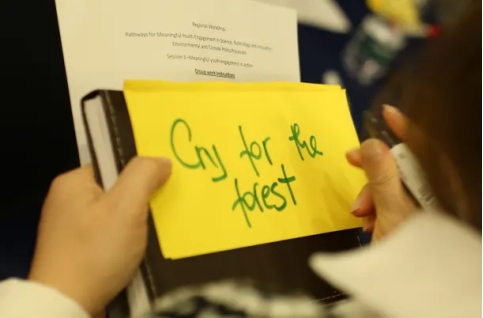
Against this backdrop, the UNESCO Office in Venice and the Environmental center for Development Education and Networking (EDEN) co-organised a regional workshop on 'Pathways for Meaningful Youth Engagement in Science, Technology and Innovation, Environmental and Climate Policy Processes' held on 19-20 November 2025 in Tirana, Albania. The workshop brought together 25 international young activists from 9 countries who collectively explored and mapped practical pathways to translate youth participation into actionable policy contributions across South-East Europe.
"Europe's future is digital, low-carbon, and innovation-driven. For the Western Balkans, this means also accelerating STEM and green skills, investing in research and climate-smart technologies, and supporting youth-led innovation and entrepreneurship, said Ingrid Macdonald, UN Resident Coordinator in Albania.
The workshop featured a high-level panel on 'Positioning Youth in Environmental Policy Frameworks', with representatives from the National Agency of Youth, the National Agency of Protected Areas of Albania, the Municipality of Tirana, the Embassy of Sweden in Tirana, and UNESCO. These exchanges highlighted the growing recognition of youth as essential partners in shaping inclusive and forward-looking environmental policies.
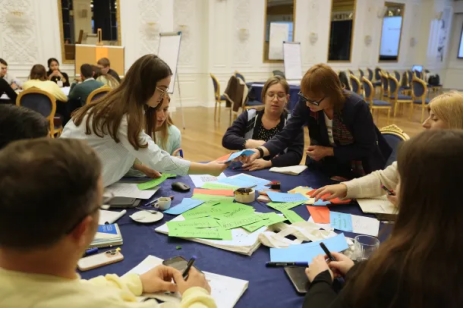
Participants engaged in a series of interactive sessions, including presentations of successful youth-led initiatives from across the region, dialogues with high-level figures, practical sessions on defining youth engagement, and identifying strategies to achieve it. On the final day, they collaborated on a Youth Perspective for COP30, drafting recommendations on national climate policies, green jobs, and entrepreneurship.
"Our country is decisively making progress in EU membership negotiation and UNFCCC commitments, pursuing reforms and climate policies to ensure a more sustainable, resilient, clean and fair future for young people and all generations, said Fatjona Cinaj, Director of the Directory for Climate from the Ministry of Environment of Albania.
Despite this progress, youth participation in policy processes continues to face persistent barriers, including financial constraints, educational gaps, inadequate access to information, and deeply rooted seniority cultures.
Drawing on 'UNESCO' s toolbox for youth policy and programming', the working groups outlined a shared vision of meaningful youth engagement: a participatory process where young actors are involved as partners and leaders at every stage of environmental, scientific, and governance initiatives. Central to this approach are partnership-building, advocacy, and networking.
Through dynamic exchanges and collaborative sessions, the workshop created a vibrant platform for young participants to share ideas, engage with professionals, and receive constructive feedback. Together, they explored potential pathways for youth-led entrepreneurship, employment, and leadership in the green and digital transitions.
Too often, youth voices remain unheard in key decision-making spaces, particularly in science, technology and environmental policy. Opportunities for young people to contribute meaningfully to progress in these fields remain limited. This is what UNESCO, together with its partners, aims to change by bridging the gap ahead, advancing policies that are inclusive, ambitious, and forward-looking for generations to come.



wydf@wydf.org.cn

