


More than 1,000 young people from 70 countries gathered ahead of the seventh session of the Open-ended Committee of Permanent Representatives (OECPR) in Nairobi, Kenya, for the Youth Environment Assembly (YEA), a youth-led forum to discuss priorities and policy solutions to some of the planet’s most-pressing environmental problems.
Over the course of 16 sessions, delegates exchanged ideas on strengthening environmental governance, from reforming the multilateral environmental architecture to aligning educational systems and labour markets with green transition needs. They even took over the social media channels of the United Nations Environment Programme (UNEP), putting youth voices front and centre ahead of the UN Environment Assembly, the world's highest decision-making body on the environment.
Here are six key takeaways from the Youth Environment Assembly.
Youth are calling for more inclusive and coordinated environmental action
Throughout the sessions, young people emphasized the need for environmental governance that embeds intergenerational equity, is grounded in science and community priorities, and promotes greater coherence across multilateral environmental agreements. Their reflections highlighted a desire for systems that work together more effectively, and for processes that are transparent and accessible to young people everywhere.
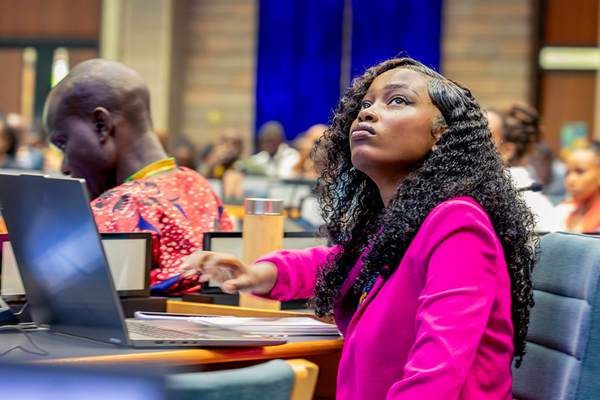
Youth want a financial system that supports long-term sustainability
Delegates discussed how global financing models influence environmental progress and development opportunities. Many expressed the need for financial systems that better reflect today's realities, especially in communities facing climate and economic pressures. Their message was forward-looking: investments must support resilience, equity and sustainable growth.

Youth reimagined the science-policy interface to be grounded in young people's expertise and lived experiences
Science should remain at the core of decision-making. Youth delegates underscored the need for UNEA resolutions and decisions to be based not only on the best available scientific understanding, but also on the knowledge of Indigenous and traditional communities as well as youth. They encouraged strengthening the engagement of young scientists in developing environmental assessments and maintaining such practices as the Global Environment Outlook (GEO) fellowship programme, which selects young people to support the development of UNEP’s flagship report.
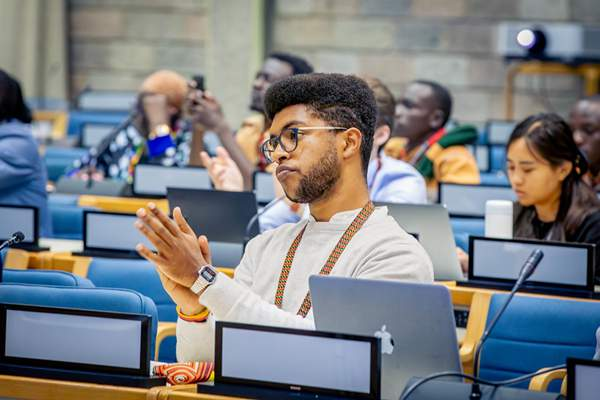
Youth focused on creating a toxic-free future
Young people brought together the secretariats of multilateral environmental agreements and global frameworks on chemicals, waste and pollution to foster an intergenerational dialogue on the sound management of chemicals and waste and the prevention of pollution. Major highlights included the launch of the #YouthtoBEATPOLLUTION campaign and the launch of the Global Waste Management Outlook 2024 for Youth, which translated key findings on global waste challenges through a youth lens and spotlighted youth-led zero-waste initiatives. These exchanges demonstrated how young people engage across multilateral processes and drive change within their own communities.
Youth voices reached global audiences
For two days, youth delegates coordinated a takeover of UNEP's social media channels, offering real-time updates, reflections, and behind-the-scenes perspectives from the assembly. Their storytelling brought the energy of the assembly to audiences worldwide.
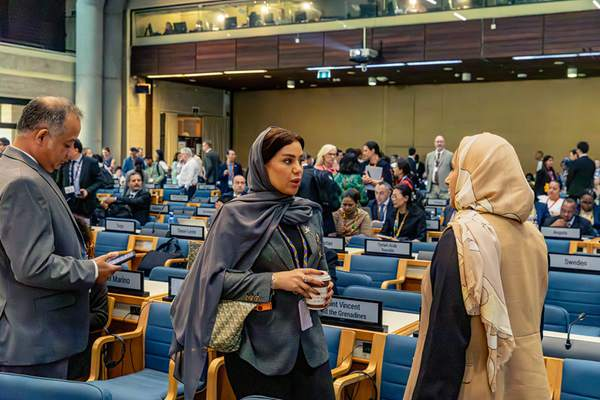
The assembly reaffirmed the essential role young people play in designing and implementing solutions
The Youth Environment Assembly culminated in the high-level closing on 7 December 2025, where the Global Coordinators of the Children and Youth Major Group to UNEP handed the Global Youth Declaration on the Environment to UNEP’s Executive Director Inger Andersen and UNEA-7 President H.E. Dr. Abdullah Bin Ali Al-Amri. The Global Youth Declaration, grounded in the lived experiences and expertise of young people and the principle of intergenerational equity, represents the collective voice of children and youth worldwide and articulates a clear roadmap for transformative change, calling on UNEA and UNEP to adopt bold, systemic measures that are fit for purpose.



wydf@wydf.org.cn

