


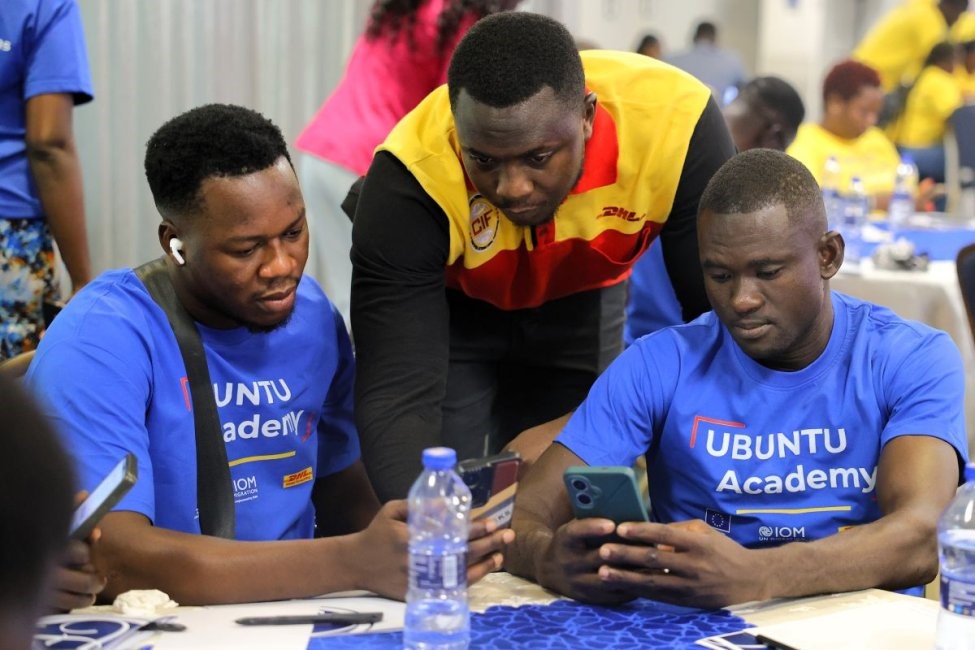
The International Organization for Migration (IOM) and DHL Global Forwarding have launched a new digital training academy in Ghana. The programme aims to equip 10,000 young Africans with logistics and workplace skills over the coming years. It offers a scalable model for private sector engagement to support employment opportunities for thousands of young Ghanaians, including returned migrants seeking to reintegrate into their communities.
"Private sector partnerships are essential to unlocking the potential of young Africans and ensuring migration delivers on its promise of development," said Fatou Diallo Ndiaye, IOM Chief of Mission in Ghana, Togo and Benin. "We are deliberately reshaping what reintegration means, linking it to real labour market opportunities and sustainable growth, and showing that return can be the beginning of new journeys, opening pathways to meaningful work and economic empowerment."
With the support of DHL's GoTeach initiative, the Ubuntu Academy leverages artificial intelligence (AI) to deliver self-paced e-learning courses in supply chain management and professional skills. By combining corporate expertise with international development objectives, the initiative marks a significant step in addressing one of Africa's most pressing challenges: providing economic opportunities for the growing young population while supporting the reintegration of returning migrants.
The Ubuntu Academy is designed to strengthen the employability of young Ghanaians, including returned migrants. To date, the Ubuntu Academy has over 200 active users on its digital learning platform.
The academy is part of DHL's broader GoHelp Program partnership with IOM, which includes humanitarian logistics initiatives worldwide. The training model has already been piloted in Kenya, Uganda, Zimbabwe and the Philippines, where a similar programme called Tulaya Academy has placed at least nine graduates in supply chain roles. Two of the Ubuntu Academy graduates from other regions work at DHL today.
Since 2022, IOM has facilitated the voluntary return of more than 170,000 migrants across West and Central Africa, including more than 6,000 in Ghana. While Ghana serves as a key launch market in West Africa, there are plans for further expansion across the continent.



wydf@wydf.org.cn

