


As the lead agency for education in the United Nations system, UNESCO is charting new frontiers in advancing global education policy, and youth participation. Guided by the principle of "UNESCO for the People", they are supporting major educational reforms in countries that need it the most, promoting skills and learning for work and life, and facilitating access to education for student refugees.
Education policies have a profound impact on young people, who are also disproportionately affected by poverty, inequality and limited access to quality education and decent work opportunities. Although progress has been made in involving young people and students in global decision making in education, too often they remain excluded.
Recognizing young people as co-creators of education advances a more equitable, innovative, and sustainable reality.
UNESCO is working to increase youth participation in education in several ways including through UNESCO’s SDG 4 Youth & Student Network, where young people contribute to global educational policy, advocacy and innovation, and are members of the SDG 4 High-Level Steering Committee. Further initiatives include amplifying youth voices in ASPnet schools and supporting youth to work with Member States on international policy frameworks during the Youth Forum.
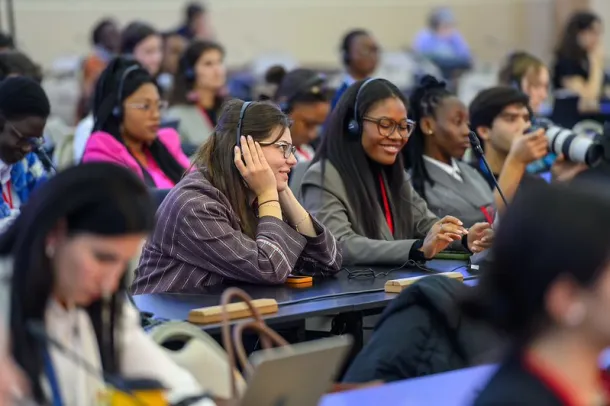
14th UNESCO Youth Forum - 28 October 2025. UNESCO/Husniddin Ato
UNESCO's qualifications passport, a tool designed to recognize the prior learning, qualifications, and credentials of refugees and vulnerable migrants to enable their access to higher education, has made a tangible difference to young people who have fled conflict.
In Chad, UNESCO uses financing of the Global Partnership for Education to expand second-chance and skills-linked education pathways that empower young people who are out of school or at risk, especially in fragile and displacement-affected areas. Through the non-formal basic education and literacy track, UNESCO supported training opportunities for around 43,000 children and adolescents (about half girls) in non-formal basic education linked to practical trades, and reached about 58,000 learners in literacy programmes, the vast majority women, supporting learning, skills and reintegration. These results are delivered alongside system strengthening (EMIS, planning, teacher professional development) so youth support is not stand-alone but embedded in national delivery and monitoring systems.
Engaging youth in policymaking is especially critical as education systems stand at a crossroads of radical transformation driven by the growing influence of artificial intelligence. These new developments demand innovative education policy frameworks and responses. At a time when out-of-school numbers are again on the rise (272 million worldwide), strong political and financial investments in education are more urgent than ever.
New UNESCO report on leading with youth
Recognizing the intrinsic importance of youth engagement, the 2026 Global Education Monitoring (GEM) Youth Report, Lead with Youth, highlights the power of young people as co-creators of education, a theme that also resonates with this year's International Day of Education. The report, in collaboration with the UN Youth Office, also introduces a new global measurement assessing student and youth participation in education legislation and policymaking.
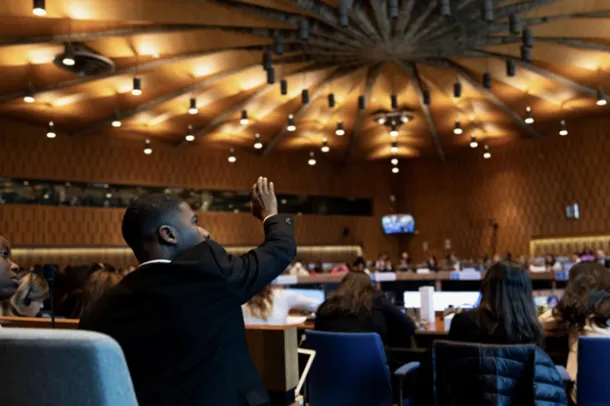
As revealed in the new report, only one in three governments are required by law or policy to engage youth in shaping education policy, and even when engagement occurs, students regularly perceive their contributions as meaningless.
UNESCO
For youth engagement to be meaningful, more is required than mere consultation. UNESCO is actively pushing for youth to be treated as equal partners, through the implementation of formal mechanisms, transparent representation, adequate resources, and clear feedback loops.
This commitment reflects UNESCO's high regard for youth and its ambition to strengthen their influence on the global stage. UNESCO is leading the way towards the realization of this goal by empowering youth as leaders and changemakers through various programmes.
Education must be shaped not for youth, but with them.



wydf@wydf.org.cn

