


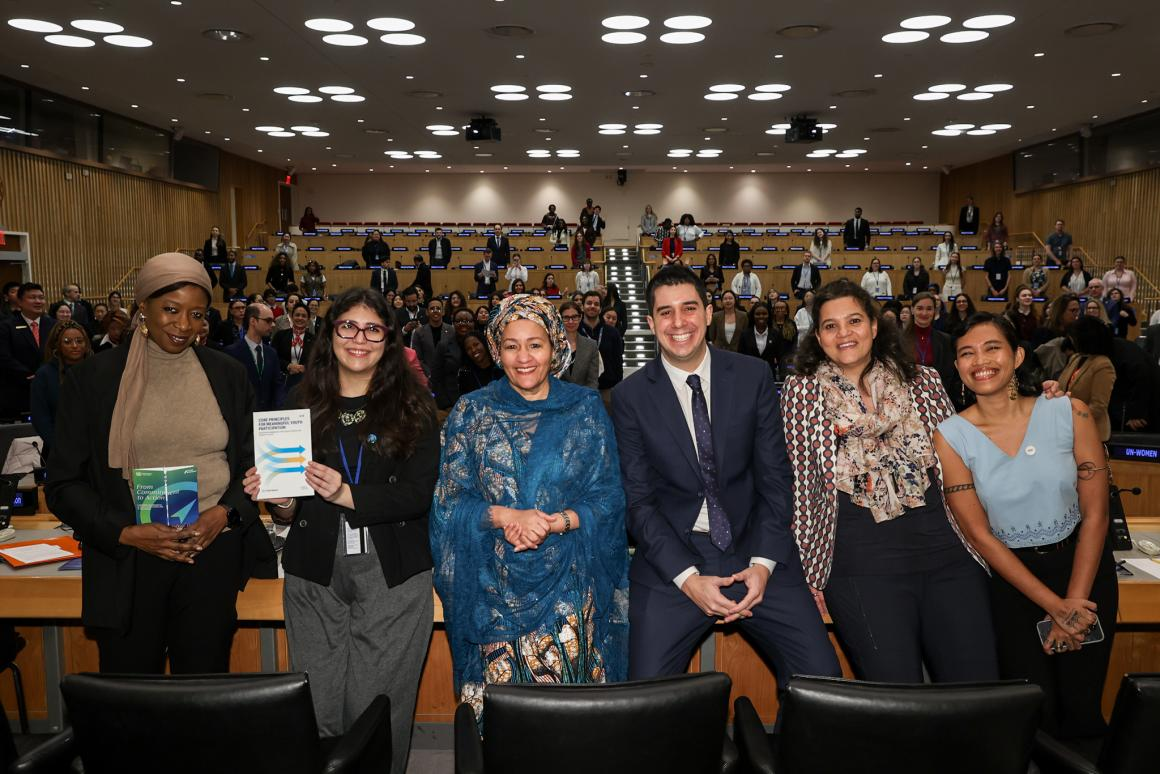
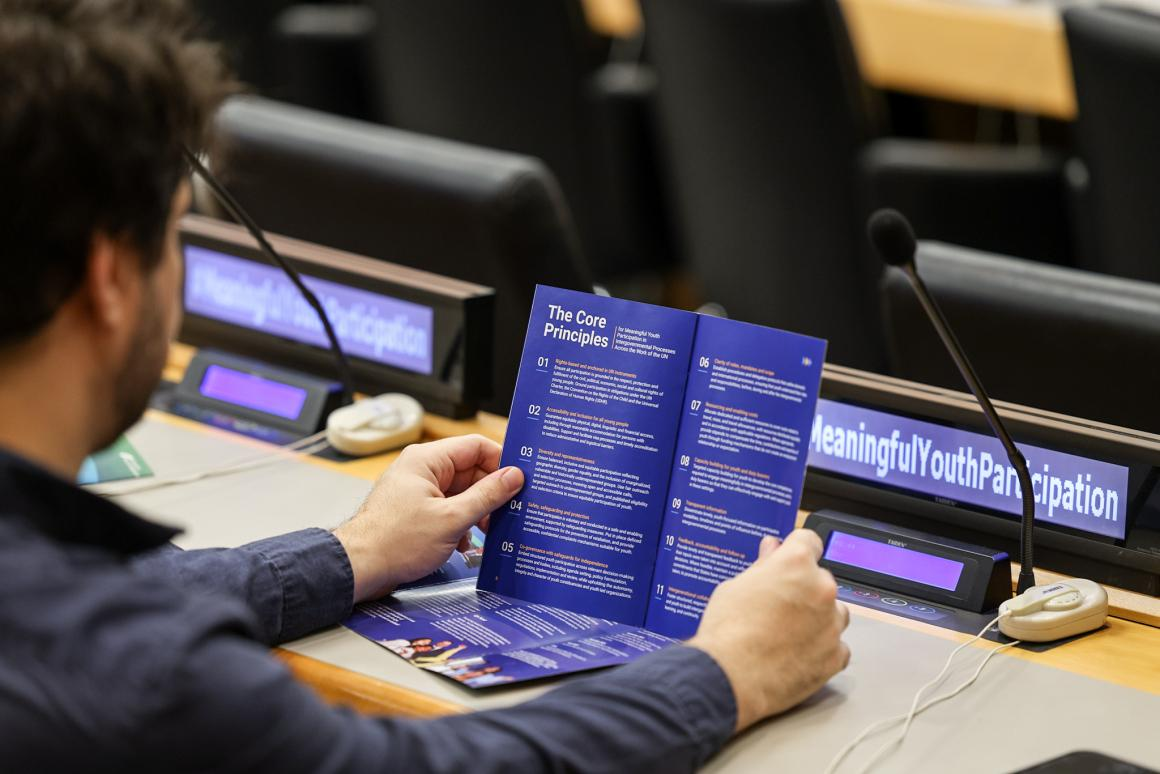
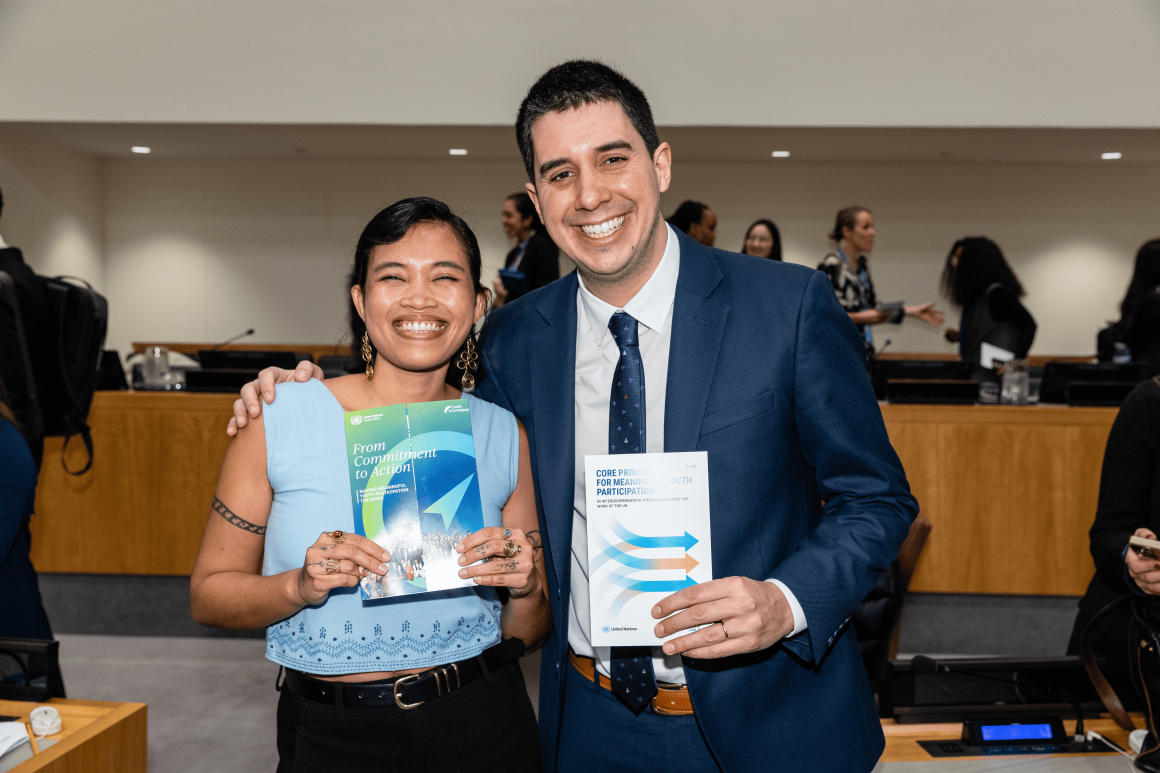
Against the backdrop of the 70th Commission on the Status of Women (CSW), the UN Youth Office, in collaboration with the Executive Office of the Secretary-General, UN Women and UNFPA, co-hosted the launch of the Core Principles for Meaningful Youth Participation in Intergovernmental Processes and Across the Work of the United Nations.
These Core Principles are part of the broader effort to expand youth participation and to ensure that it is grounded in inclusion, equity and shared decision-making. Their launch during CSW serves as recognition of the fact that meaningful youth participation cannot exist without the leadership of young women and girls at its center.
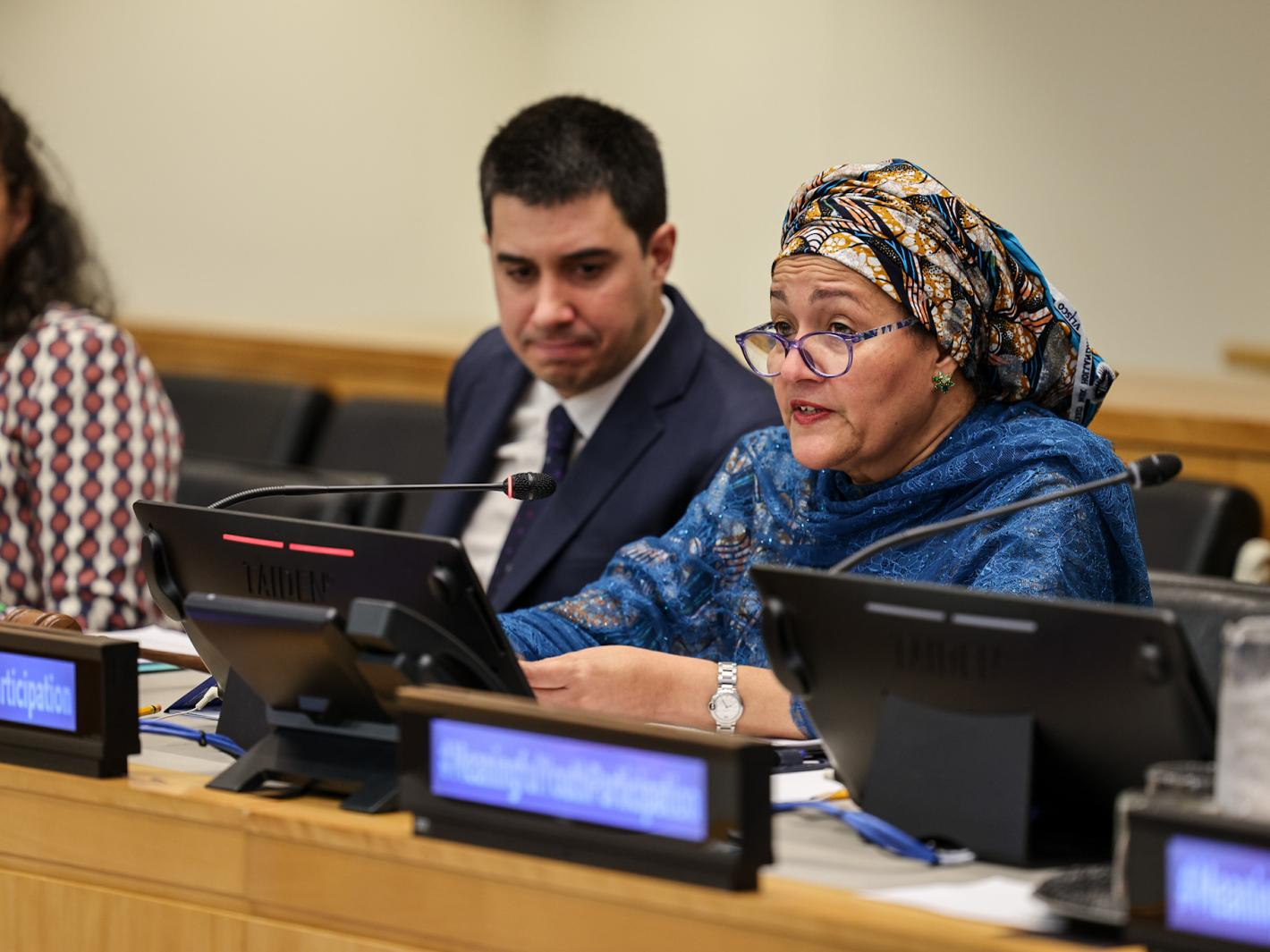
The Deputy Secretary-General, Amina J. Mohammed opened the event by contextualizing the launch in a wider institutional context, inviting young people in the audience to use the Core Principles to hold decision makers accountable. She emphasized that the importance lies in putting the principles into practice and encouraged young people to engage actively with institutions to implement them. She was joined during the opening by the Executive Director of the United Nations Population Fund (UNFPA), Diene Keita; Assistant Secretary-General for Youth Affairs and Head of the UN Youth Office, Felipe Paullier; Ambassador and Deputy Head of the EU Delegation to the UN, Ambassador Hedda Samson; and Natalia Tsukuyama, youth representative and a member of the Pact of the Future Working Group on Meaningful Youth Participation.
Keita and Ambassador Samson gave concrete examples of their institutional commitment to meaningful youth participation, from the UN Youth Marker which UNFPA is piloting to track their investments in young people, to governance structures like the Youth Sounding Board which the European Union has in place to ensure youth voices are systematically included in their programmes at all levels. The EU representative also highlighted the Youth Empowerment Fund, a mechanism that ensures funding goes to youth organizations which are otherwise chronically underfunded.
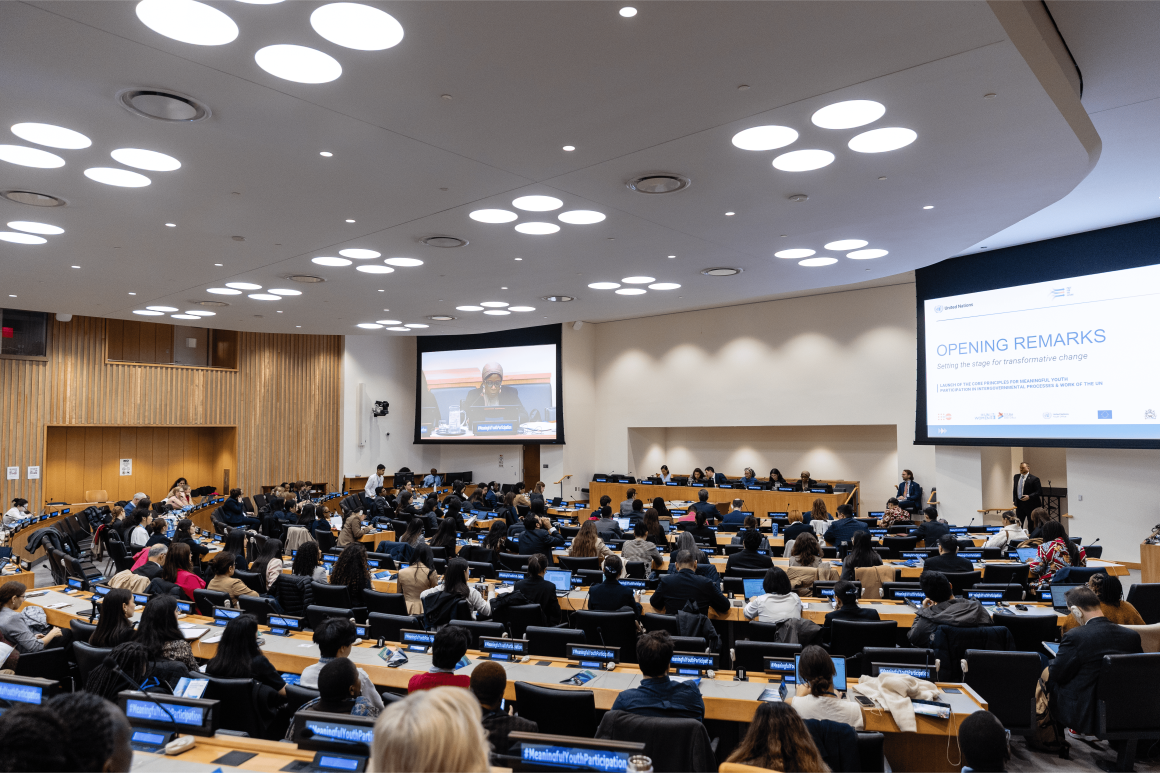
ASG Felipe Paullier reinforced the important role of meaningful youth participation by noting that, “When young people participate meaningfully, they offer fresh ideas, urgency and perspectives that challenge institutional routines. And this can lead to some tension - but it is a positive tension. It’s the kind of creative friction that happens when new ideas meet old ways of doing things.”
Young people are increasingly acknowledged as essential actors in advancing peace, equality, climate action, digital innovation and human rights. Yet in many international spaces, participation remains limited, inconsistent, fragmented or shaped by barriers that exclude those furthest from power. Developed under Action 37(d) of the Pact for the Future, the Core Principles respond to that challenge by offering practical, non-binding guidance for participation that is rights-based, inclusive, safe and accountable.
Daphne Frias, Climate and Disability Youth Organizer, said the Principles respond to a long-standing demand from young people: a real share in power, not just a seat in the room. “What these principles tell us is that this building is ours too…the misconception is that we [youth] should be simply honored to be part of these hallowed halls, but the honor is all of ours.”
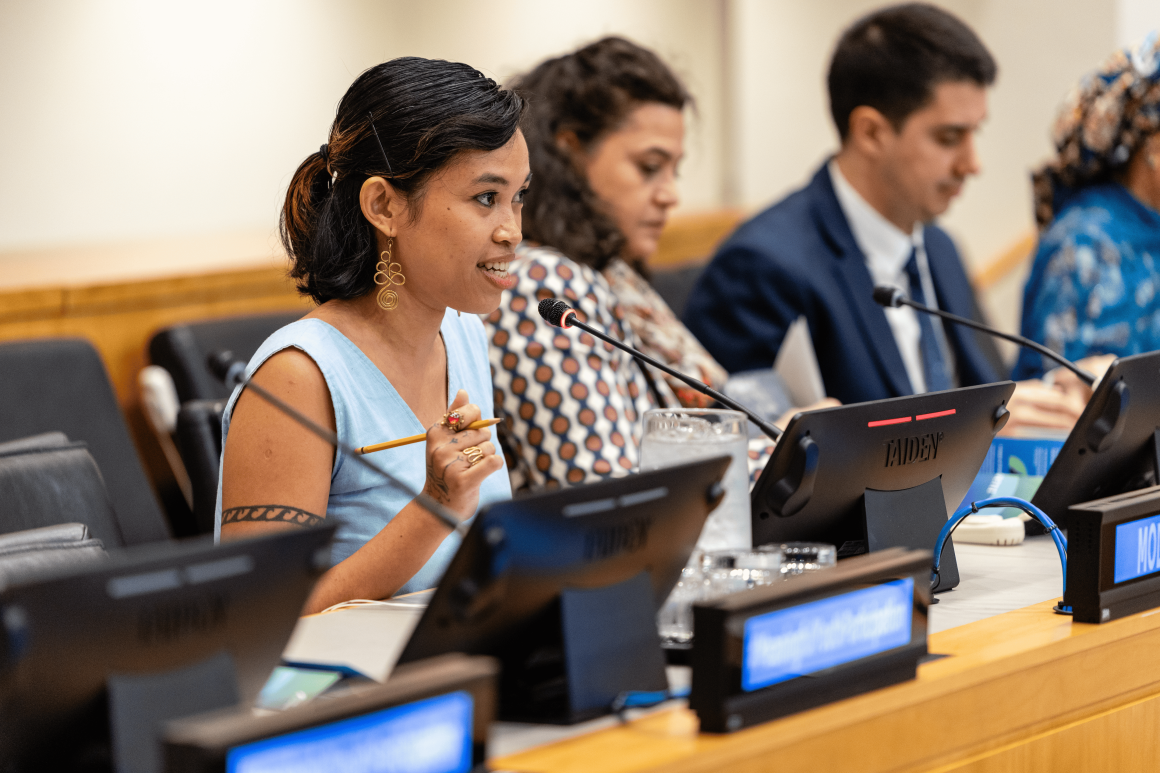
Daphne shared the stage with Ambassador Rui Vinhas, Permanent Representative of Portugal to the United Nations; Patricia Kavinya, Youth Delegate from Malawi; and Angélica Jácome, Director of the Food and Agriculture Organization of the United Nations Liaison Office. Together with the vibrant crowd who intervened from the floor, they discussed concrete examples of how Member States and UN entities can meaningfully recognize and support the expertise and leadership of young people.
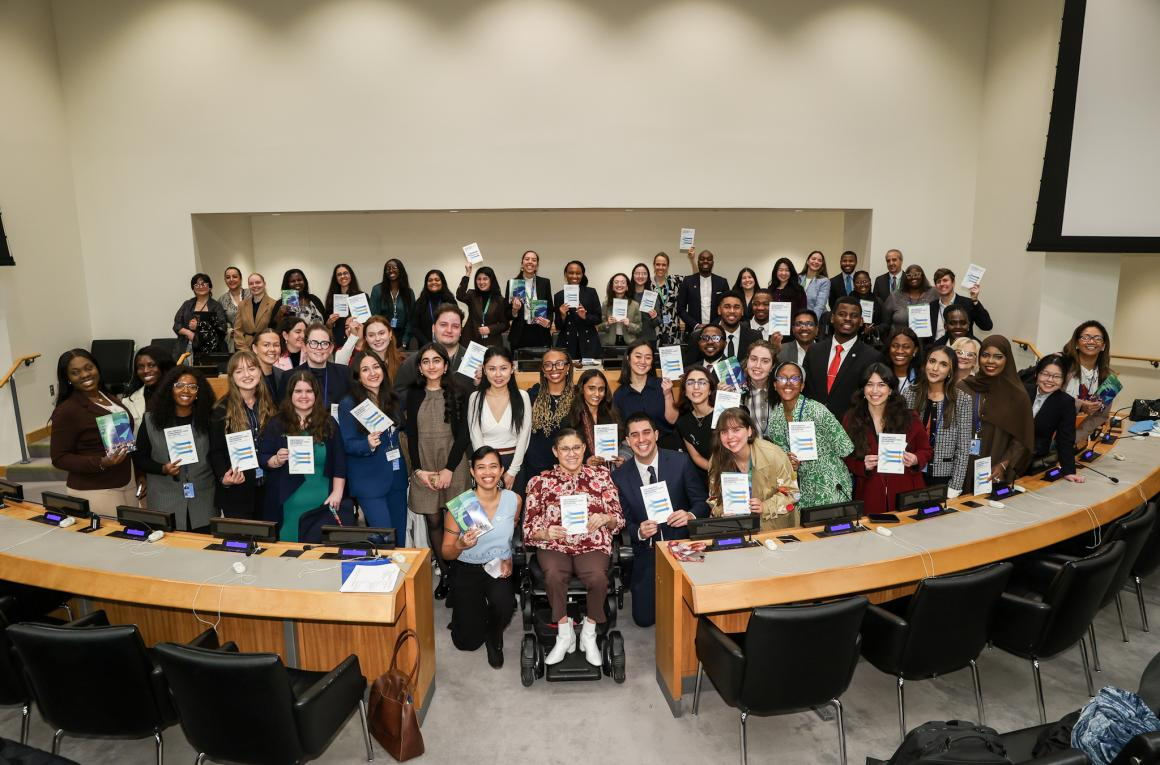
Throughout the event, one point kept coming back: youth participation and gender equality are not separate issues. They shape one another. The launch highlighted that meaningful inclusion requires tackling the structural barriers that still prevent many young women, girls and other marginalized young people from fully participating in the policies and decisions that affect their lives.
The launch of the Core Principles is not the end of the process, but the beginning of a new chapter. What matters now is what comes next: as Young Leader Natalia Tsukuyama put it, “The next phase depends on our collective commitment to translate them into practice. Don’t let us down.”



wydf@wydf.org.cn

