


Research shows that 90 per cent of young people feel frustrated at the lack of inclusive, equal and representative opportunities for youth to influence global policy. As a response, the United Nations Youth Office, UNICEF Office of Strategy and Evidence – Innocenti, and the United Nations Futures Lab set out to explore and model what truly meaningful youth participation looks like, particularly by leveraging strategic foresight. Our journey resulted in a global decentralized process led by young people, reaching over 75,000 youth from over 180 countries.
Youth Perspectives on Youth Engagement
The world is increasingly becoming more riddled with challenges for children and youth as conflict grows, climate change accelerates and the risks associated with emerging technologies remain unaddressed. But we see a glimmer of hope in movements demanding change: from children and young people calling for a seat at the decision-making table, to the UN reimagining its own systems through the UN 2.0 initiative and the integration of strategic foresight to enhance anticipatory capacity.
However, persistent barriers continue to hinder meaningful engagement, as evidenced by research that asked young people to reflect on their experiences in multilateral forums. Despite the investments and efforts from partners to enable youth representation and participation in multilateralism, 90 percent felt that the spaces and processes for youth engagement were not inclusive, equal or representative. For 80 percent, participation felt tokenistic, with minimal influence on actual policy or decision-making.
These figures are a sobering reminder of the deep-seated structural barriers that remain. They indicate that current models of engagement often stop at the surface level rather than sharing power.
It is important that this evidence does not lead to inertia. Instead, it underscores the urgent need for systemic reform.
Strategic Foresight for Meaningful Youth Participation
Building on a deeper understanding of the barriers to youth participation, UNICEF Office of Strategy and Evidence – Innocenti set out to explore what meaningful youth participation truly entails and landed on the following definition: Meaningful youth participation is where children and youth are involved as equal partners; where their views and circumstances are respected and given due weight in decision-making; where marginalized youth also get the opportunity to participate; and where youth from all backgrounds are welcome and engaged as agents of change rather than just beneficiaries.
Strategic foresight emerged as a powerful tool to support this vision. It can offer a structured and systematic approach to exploring future possibilities, helping anticipate challenges and opportunities and preparing for change. Crucially, the inclusion of youth in foresight processes is increasingly recognized as essential for sustainable development and effective policymaking. As present and future leaders, young people bring perspectives shaped by longer future horizons and greater exposure to the consequences of today’s decisions, making their participation essential to addressing long-term challenges.
It became clear that a collaboration between UNICEF Innocenti, the United Nations Futures Lab (UNFL), and the United Nations Youth Office would strengthen our common goals to advance meaningful youth participation in decision-making processes and seek innovative ways to foster long-term thinking. One such opportunity emerged ahead of the 30th anniversary of the World Programme of Action for Youth (WPAY).
Behind the scenes of the #YouthLead Dialogues
In 2025, the United Nations Youth Office envisioned and organized an initiative called #YouthLead Dialogues, a decentralized youth-led process to elevate perspectives from around the world. These insights would inform the high-level meeting on youth affairs to commemorate WPAY, urging the UN, Member States and partners to advance youth participation. Our three institutions seized the opportunity to integrate strategic foresight into this exciting initiative to gather insights on a global scale.
Strategic foresight was critical in shaping the guiding questions that young people around the world would use to lead their own self-organized dialogues on youth affairs. These questions were rooted in the Three Horizons framework, inviting participants to share observations about the present through Horizon 1, visions of their preferred future in 30 years through Horizon 3, and innovations and disruptions that could help us make that future a reality through Horizon 2.
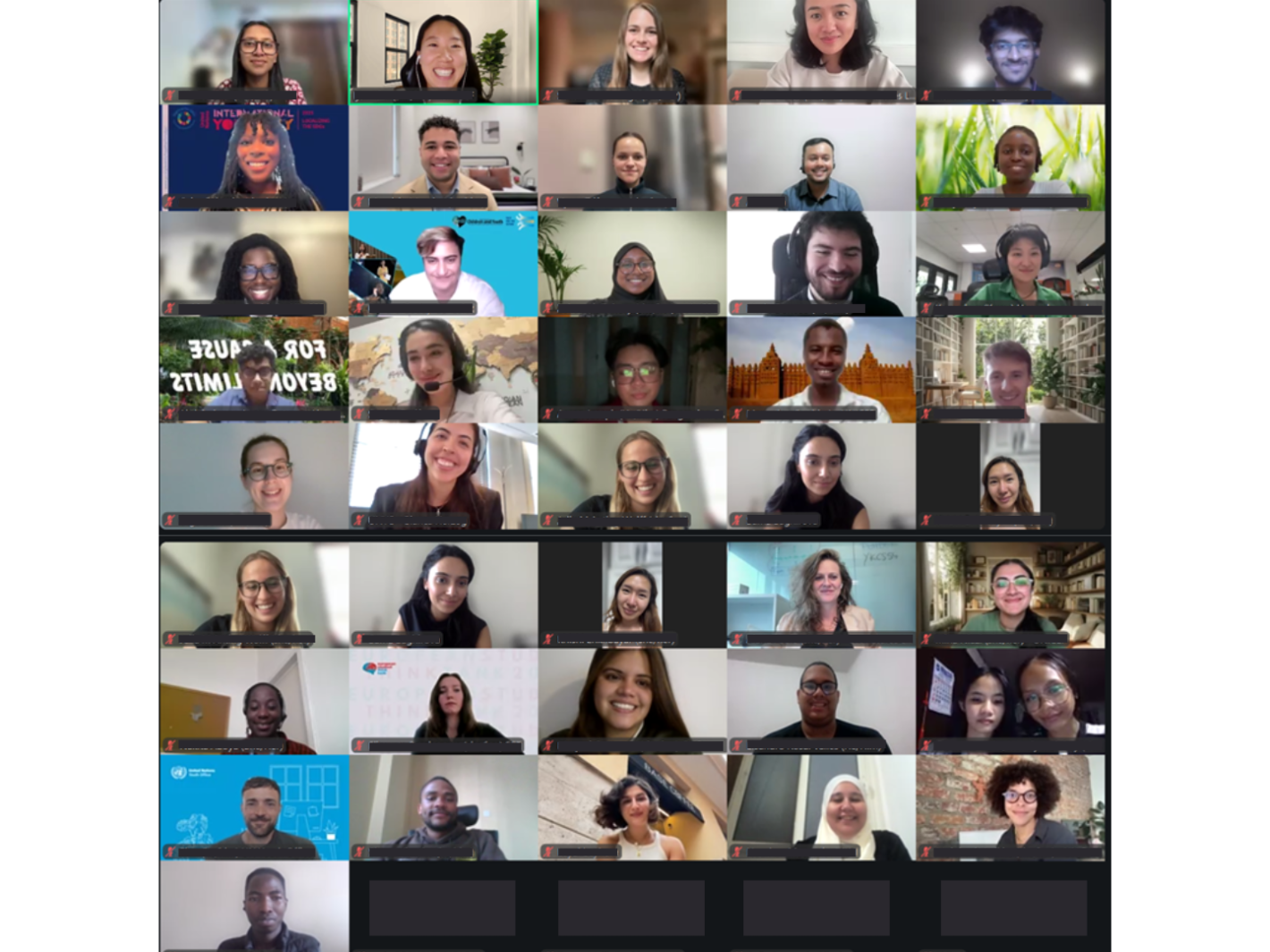
Next, we hosted an online youth foresight workshop, inviting 40 young people who had led their own self-organized dialogues. Workshop participants built on insights gathered from around the world and identified clear action steps through a backcasting exercise. The result was a 30-year timeline full of ideas ranging from youth being involved in education budget planning from 2028 to young people leading startups that combine indigenous wisdom and modern climate innovations from 2040 onwards.
Key insights from the #YouthLead Dialogues
The global dialogues revealed that the future of employment and education were the top priorities for children and young people. They called for education that revolves around their wellbeing, with one workshop participant from India describing that they want to see “everyone learning in different ways without being frowned upon.” Education should prepare them to be active citizens and employment opportunities should enable them to live sustainable and fulfilling lives. This vision was contrasted with their frustration or anxiety about what learning and working looks like today, highlighting a significant gap between their dreams and reality.
Systems that foster healthy communities were another area of keen interest. Children and young people emphasized that health can only be achieved and maintained when we consider both the mind and body, as well as the environment in which we live. Such visions were closely tied to community values and practices that encourage empathy and connection, which many young people pointed out were sorely lacking in 2025. Strengthening such values would, as a dialogue participant explained, ensure “everyone feels confident, creative and hopeful.”
Technology featured prominently in discussions. When sharing observations about the present, participants expressed growing concern that emerging technologies are being developed without their inclusion or any consideration of their best interests. Additionally, a poignant reminder from a workshop participant in Bangladesh highlighted that access “depends on place and privilege.” Despite such frustrations, technology was an irreplaceable part of their preferred future, playing a key role in fueling innovation that allows humanity to address new challenges.
【This article was authored by Shai Naides (UNICEF), Chris Earney (United Nations Futures Lab), Bianca Herzog and Maryam Pandi (United Nations Youth Office).】



wydf@wydf.org.cn

