


On 1 April 2026, UNESCO brought urgency to the fight against racism and discrimination through another global edition of the Master Class, bringing focus to the realities of these issues while engaging young people as active contributors to change.
UNESCO
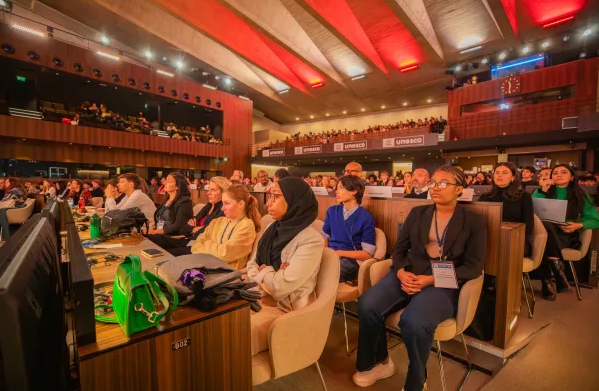
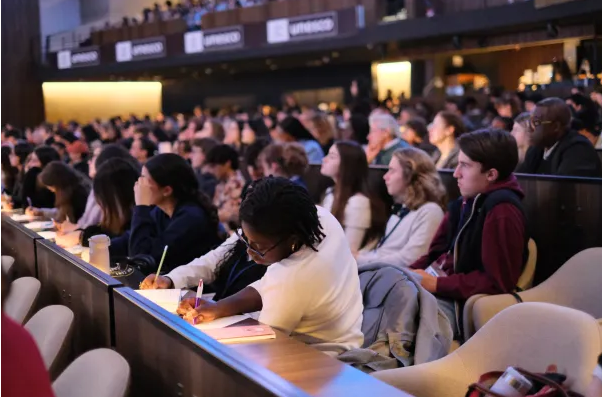
The annual Master Class against Racism and Discrimination, held in a hybrid format with some 1300 participants joining in person and 8000 joining online, brought together students, policymakers, cultural figures, and antiracism advocates under a compelling theme: youth as frontliners. At a time when one in five people globally reports experiencing discrimination, the event leaned into a simple but powerful premise: lasting change begins with awareness, but it is sustained through action.
UNESCO
Opening the session, H.E. Mr. Khondker M. Talha, President of the 43rd General Conference of UNESCO set the tone by emphasizing the collective responsibility required to dismantle prejudice. This was followed by remarks from Lidia Brito, Assistant Director-General for Social and Human Sciences a.i. who highlighted the importance of equipping young people not only with knowledge, but with the confidence to challenge discrimination in their daily lives.
The energy in the room shifted during the “Spotlight” session featuring Lilian Thuram. More than a former World Cup-winning footballer, he has become a leading voice in anti-racism advocacy. Speaking candidly about identity, history, and systemic bias, he urged participants to question inherited narratives and recognize how deeply rooted inequalities shape societies. The discussion that followed was less a Q&A and more a reflection with young participants asking thoughtful, often difficult questions about privilege, representation, and responsibility.
Historian and journalist Xavier Mauduit expanded the conversation by grounding it in historical context. His plenary reminded participants that racism is not an isolated phenomenon but one embedded in systems, policies, and collective memory. Understanding its origins, he suggested, is essential to dismantling its present forms.
The informal discussion that followed brought together a diverse panel—from sport and culture to governance and business. Voices like Francis Mercier, André de Jeu and Emilie Van Landeghem, explored how influence operates in different sectors, while Danièle Tjek, who also served as the Mistress of Ceremonies, bridged these perspectives with the lived realities of young people. The conversation moved fluidly between personal experiences and structural challenges, reinforcing a central idea: addressing discrimination requires action across all spheres of society.
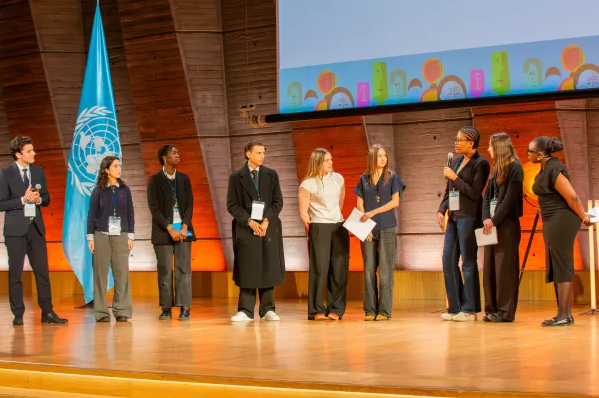
The most compelling segment came from the students themselves. Presenting projects developed in their schools and communities, they demonstrated what it means to translate dialogue into action. From awareness campaigns to peer-led workshops and discussion circles, their initiatives reflected both creativity and a deep understanding of the issues at hand. As a takeaway from the Master Class, students noted that they felt better informed and more prepared to engage others in conversations on inclusion.
UNESCO
As the session drew to a close with remarks from H.E. Dr Nasser Bin Hamad Al Hinzab,Chairperson of the Executive Board of UNESCO, the message was clear: the fight against racism is not confined to institutions or policies. It lives in classrooms, conversations, and everyday choices.
In the end, the Master Class did not offer easy answers. Instead, it did something far more important. It equipped the youth to ask better questions, challenge deeper assumptions, and step forward, not as observers, but as actors in shaping a more inclusive world.



wydf@wydf.org.cn

