


In Mansoura, a bustling city in northern Egypt's Nile Delta, public hospitals provide crucial care to people from across the country. Each day, patients arrive seeking care, including migrants and refugees, bringing with them diverse experiences, languages, dialects, and expectations of care.
For healthcare workers, these differences add another layer of complexity, as they navigate patients’ varying needs while operating under significant pressure. Managing busy hospital environments with important decisions required at every turn can make communication more difficult. Waiting times, language barriers, and the stress of seeking or providing care in high-pressure contexts can further complicate matters.
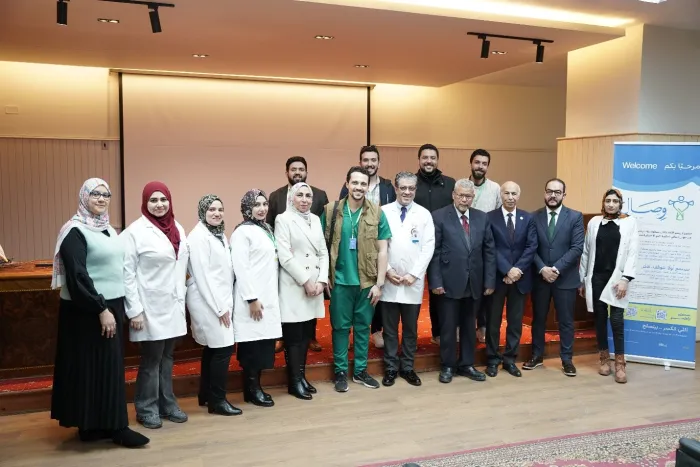
It was in these everyday interactions that Young Leader and resident physician at Mansoura International Hospital, Ahmed Essam Haroun saw an opportunity to act. Through the Youth for Peace: UNESCO Intercultural Leadership Programme, implemented by UNESCO’s Social and Human Sciences Sector (SHS), he launched: Healing Trust, an initiative focused on trust-building and improving intercultural communication between patients and healthcare workers.
With support from UNESCO, through training, mentoring and a grant, Ahmed’s initiative brings intercultural dialogue directly into hospital practice. At its core are practical, scenario-based trainings for healthcare workers, built around real situations: a relative raising their voice, a patient confused about treatment, a misunderstanding at reception. Through guided exercises, role-play and peer exchange, staff unpack what drives these situations and develop concrete skills—listening without interrupting, asking open questions, and responding more thoughtfully under pressure. These approaches enable healthcare workers to apply intercultural dialogue in practice, using tools such as non-violent communication, de-escalation techniques, trauma-informed care, and fostering psychological safety in their daily work.
These practices are supported by a shared ‘Facility Compact’, co-created by staff, patients, and community members. It outlines simple commitments on respect, clear communication, and safety, and is displayed throughout the hospital as a daily reminder. In parallel, selected staff serve as “Trust Ambassadors” and are mobilised in high-pressure departments, helping to de-escalate tensions and support communication when it breaks down, using a practical toolkit developed for this purpose. Patients’ perspectives are at the heart of this initiative, through dialogue circles, where staff and patients come together to share their experiences, surface frustrations, and address misunderstandings, in a respectful and constructive manner.
Early changes are already emerging, with staff reporting feeling better equipped to handle difficult interactions and more aware of how tone and language shape patients experiences. In some units, colleagues now step in to support one another when tensions arise, creating more coordinated and calmer responses.
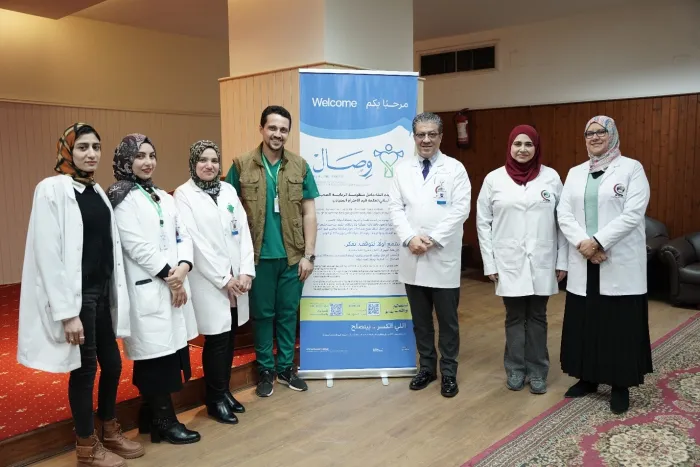
To support these improvements, the project introduces simple, shared ways of responding when tensions arise - slowing down interactions, clarifying information, calling for support and reflecting on incidents afterwards. A QR code-based feedback system has been introduced to allow patients and staff to anonymously share their experiences, helping identify recurring issues and adapt practices over time.
The next step is to test and refine these approaches further and explore how they can be adapted in other hospitals facing similar challenges. This bottom-up approach demonstrates how locally driven initiatives can create meaningful change. By helping people listen, explain, and respond to one another more effectively, the initiative is already reshaping care on the ground.



wydf@wydf.org.cn

