


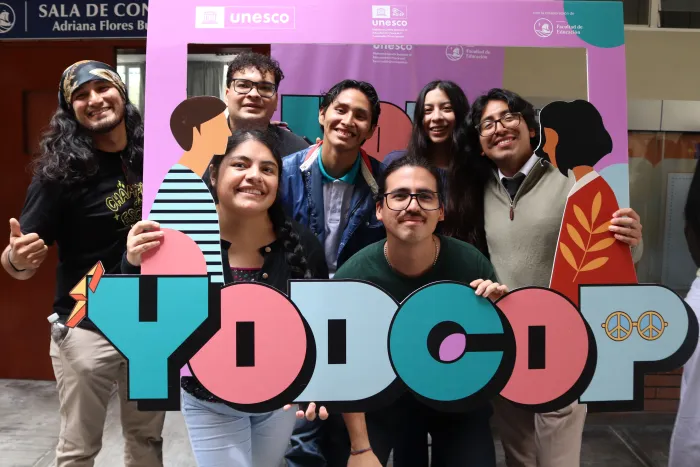
How many kilometres would you be willing to travel for peace? Young Peruvians from different parts of the country have navigated rivers in the Amazon, crossed the Andes and travelled long distances for days to reach Lima. These journeys reflect the diversity of Peru, but also the challenges that many young people must overcome to study, participate, organize and bring their projects to life. Yet their stories also speak of courage, perseverance and commitment. Despite the barriers they encounter along the way, they continue to create, organize, mobilize and open new paths for their communities.
Nearly 40 young people between the ages of 18 and 35 gathered in Lima from 21 to 23 September to share their stories and the initiatives they have been advancing. Together, they formed a diverse and vibrant forest, with strong roots and multiple trunks growing in different directions—a composition of many voices, experiences and ways of seeing the world that, by coming together, continues to grow, weave networks and open up a world of possibilities.
Youth-driven Communities for Peace (YoD-CoP) is an initiative of the UNESCO Mahatma Gandhi Institute of Education for Peace and Sustainable Development (MGIEP), inspired by these stories and by the capacity of young people to drive change in their communities.
Through its Peru edition, the initiative seeks to create spaces where young people can strengthen their capacities, share experiences, build networks and promote actions aimed at transforming their communities. The gathering was led by the UNESCO Mahatma Gandhi Institute of Education for Peace and Sustainable Development (MGIEP), in coordination with UNESCO Peru and with the support of the Faculty of Education at the Pontifical Catholic University of Peru (PUCP).
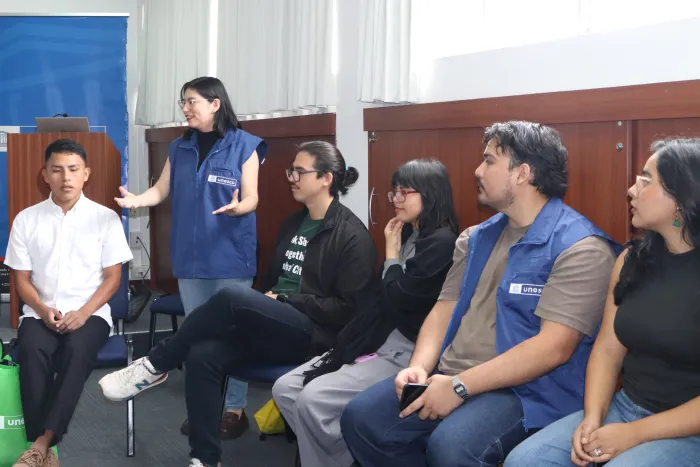
Meeting, re(discovering) ourselves and taking action
Over three days, YoD-CoP Peru 2026 offered a journey that began with participants’ own stories and experiences, moved towards reflection on inequalities and culminated in a focus on action.
The first day, “Meeting one another and naming the world”, created a space to share experiences and explore Global Citizenship Education, peace education, and media and information literacy.
On the second day, the session “Seeing ourselves and examining inequalities” focused on the gender perspective and social-emotional learning. Lastly, “Moving from learning to action” addressed project monitoring and reflection on how to sustain and strengthen the initiatives that young people have been carrying out in their territories.
The gathering also provided an opportunity to connect these experiences with institutions working in education, youth participation and communication.
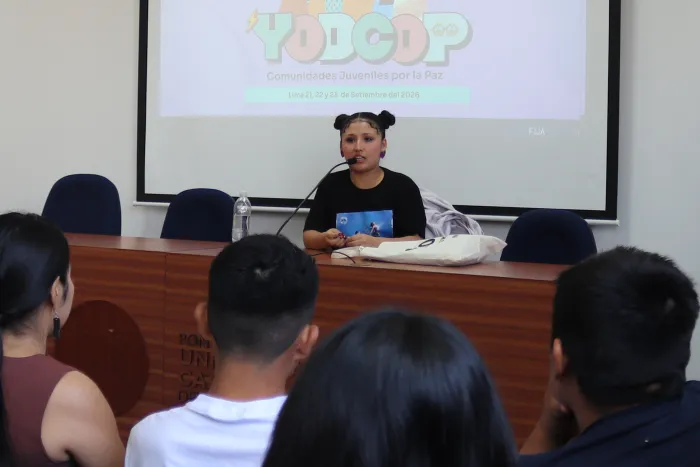
On the final day, Peruvian singer-songwriter Milena Wharton joined the young participants for a gathering centred on music and cultural identity as ways of recognizing one another, expressing our experiences and opening conversations about how to build relationships and communities free from violence.
This space brought the gathering to a close by connecting personal and collective experiences with the role of culture in building peaceful communities.
A diverse generation facing concrete challenges
In Peru, around 8 million people are between the ages of 15 and 29, representing 22.8% of the country’s total population. This is a diverse generation, with different backgrounds, territories, interests and forms of participation.
The latest data from the Youth Observatory of the National Secretariat for Youth (SENAJU) highlight some of the challenges young people face. In 2024, 45.5% of young people aged 15 to 29 were exclusively engaged in work, while 17.4% were neither studying nor working.
In terms of well-being, 13% of the young population reported experiencing at least one depressive episode during the previous twelve months in 2024. Inequalities are also reflected in violence. In 2024, 34.7% of women aged 15 to 29 reported having experienced family violence perpetrated by their husband or partner during the previous twelve months.
These figures illustrate some of the challenges facing young people, but they do not tell the whole story. There are also the responses emerging from communities, the projects taking root, the networks being built and the voices finding spaces in which to be heard.
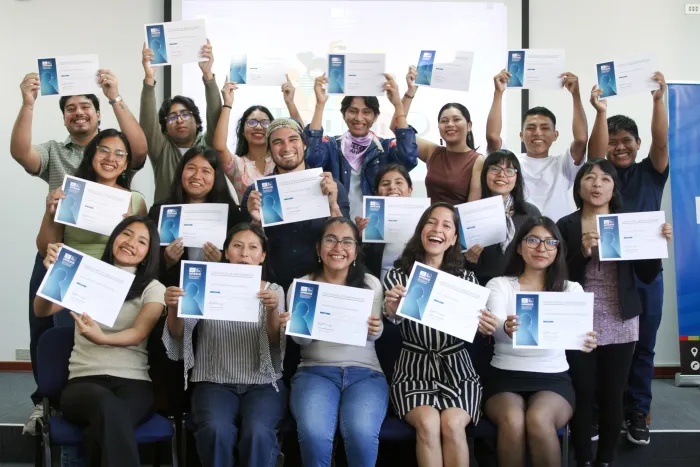
The nearly 40 young people selected for YoD-CoP 2026 are developing projects and exercising leadership in areas such as environmental and territorial protection, cultural identity, Indigenous Peoples’ rights, the promotion of lives free from violence, gender equality, human rights, inclusion, child protection, youth participation, education, democracy, science and cultural management.


wydf@wydf.org.cn

