


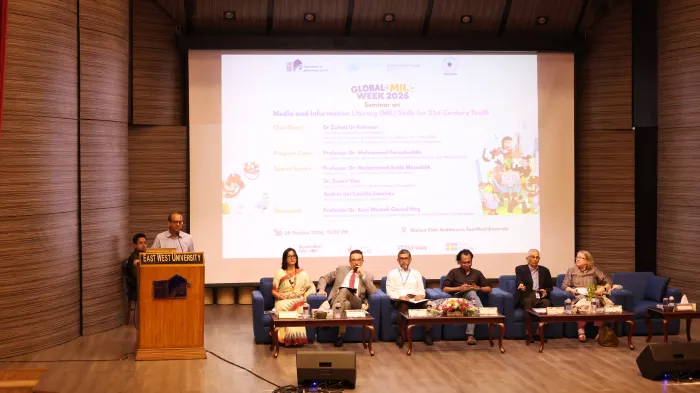
A national seminar and award ceremony in Dhaka on 29 October brought together research, educational initiatives and recognition of young people’s contributions as Bangladesh marked Global Media and Information Literacy (MIL) Week 2026.
The Department of Information Studies at East West University (EWU) organised the programme at its Manzur Elahi Auditorium, in collaboration with UNESCO Dhaka and the Media and Information Literacy Network Bangladesh (MILNetBD), with support from the UN Electoral Project–BALLOT.
Observed worldwide from 24 to 31 October, Global MIL Week promotes the skills to access, understand, critically evaluate, use, create and share information responsibly. This year’s theme, “We All Play a Part – Media and Information Literacy for the People”, highlights the shared responsibility of educators, journalists, policymakers, digital creators, civil society and young people in strengthening the information environment.
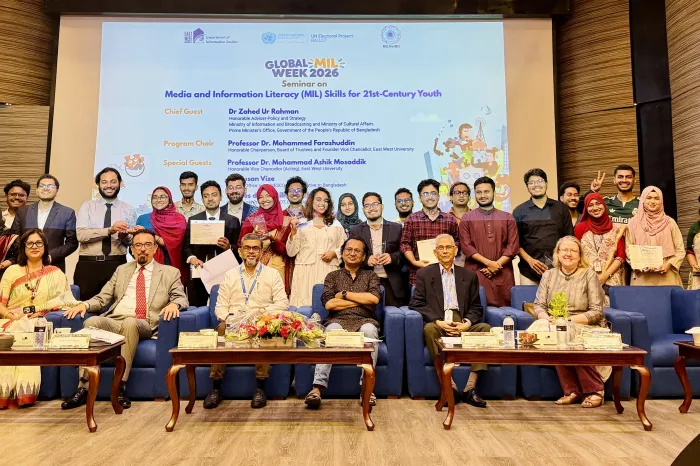
Dr Zahed Ur Rahman, Adviser to the Prime Minister, with responsibilities for Policy and Strategy, the Ministry of Information and Broadcasting and the Ministry of Cultural Affairs, attended as Chief Guest. Professor Dr Mohammed Farashuddin, Chairperson of EWU’s Board of Trustees and Founder Vice Chancellor, chaired the programme.
“Rather than imposing media and information literacy on people, we need to build awareness and encourage them to question information, including information that confirms their own beliefs. Misinformation and disinformation are global challenges. Seminars and public discussion can help people of all ages develop the critical thinking needed to respond to them,” said Dr Zahed Ur Rahman.
Dr Susan Vize, Head of Office and UNESCO Representative to Bangladesh, addressed the programme as a Special Guest. “Media and information literacy helps young people question information, think critically and make informed choices, including during elections. By embedding these skills in education and creating more opportunities for discussion and debate, we can support informed participation in democratic life,” said Dr Vize.
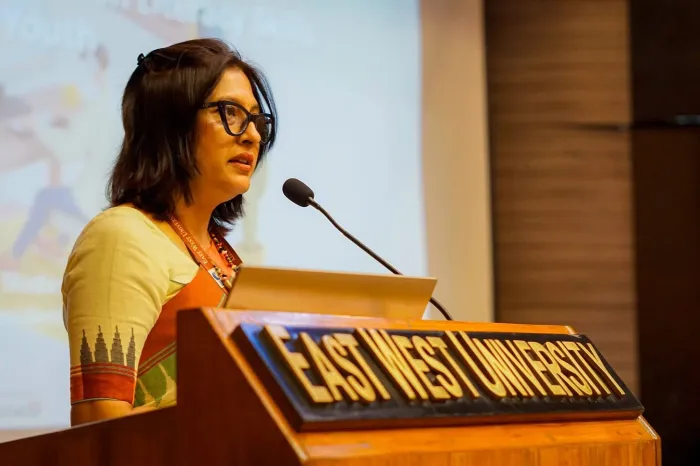
Activities at EWU began on 25 October with an awareness rally and the opening of a MIL awareness booth. These activities connected information verification, responses to misinformation and disinformation, ethical communication and responsible use of digital technologies and AI with the partners’ wider work involving teachers, students, campus groups and youth networks.
Beyond the week’s observance, that work includes the Citizenship Olympiad, MIL Ambassador activities, youth-led SAP initiatives, club video activities, the Teachers’ Fellowship and Campus Connected.
1,746 participants participated in the Citizenship Olympiad 2026 across Bangladesh representing universities, colleges and other organisations. Led by EWU’s Department of Information Studies and MILNetBD, with UNESCO’s technical support under BALLOT, it used real-life scenarios to strengthen applied MIL, critical thinking, ethical judgement and informed decision-making in digital and civic life.
Approximately 25 young people participated in the MIL Ambassador initiative, supporting peer outreach, sharing Olympiad resources and promoting responsible information use. Student Social Action Project (SAP) initiatives addressed issues including information disorder on Facebook, responsible media engagement and MIL among mothers and homemakers. Participating clubs produced videos promoting MIL, critical thinking and responsible citizenship.
Fellowships were also awarded to 24 teachers to support MIL education, mentor student-led initiatives and strengthen campus engagement. Campus Connected linked 13?universities, providing opportunities for collaboration and exchange across participating institutions.
The questionnaire-based assessment involved 1,605 respondents from all eight divisions, with data collected between June and October 2026. Among respondents, 82.2% reported no MIL-related training; 52.3% used social media as their main source of election-related information; and 62.2% reported encountering false or misleading information during elections. The average MIL index was 68.49 out of 100, classified as intermediate under the study’s framework. Accessing and creating information received lower average scores than understanding, evaluating and using information.
The keynote recommended strengthening MIL education and youth training, responsible content creation, election and civic information literacy, public libraries and educational partnerships. It also proposed a national MIL policy incorporating AI literacy and strengthening the national MIL network. Findings were shared for discussion while further work on the report continues.
The award ceremony recognised 10 Citizenship Olympiad winners, five MIL Ambassadors, five student clubs for their video contributions and three SAP teams.
The SAP awards went to Jahangirnagar University for “Information Disorder on Facebook” project; East West University for “Media Influence and Responsible Engagement” project; and Khulna University for “MIL among Mothers and Homemakers” project.
Through the week’s activities and the wider programme, the partners are connecting public awareness with opportunities to learn and apply MIL skills. MILNetBD supports cooperation among educators, researchers, librarians, media professionals and other stakeholders, sustaining engagement beyond the annual observance.
(NOTE: This story was originally prepared ahead of the event and is being republished after its conclusion.)


wydf@wydf.org.cn

